Solutions · By role
One record. Every role at the fund runs on it.
The CFO, the GPs, the deal team, the front office and the back office pull from the same source-traced record, built from the financing documents, the charter and the cap table for every company you hold. Here is what each of them gets.
Every partner gets a login the day the first document lands. Nothing anyone types changes the record.
For CFOs and fund finance
Quarter-end becomes a review. The what-ifs stop landing on your desk.
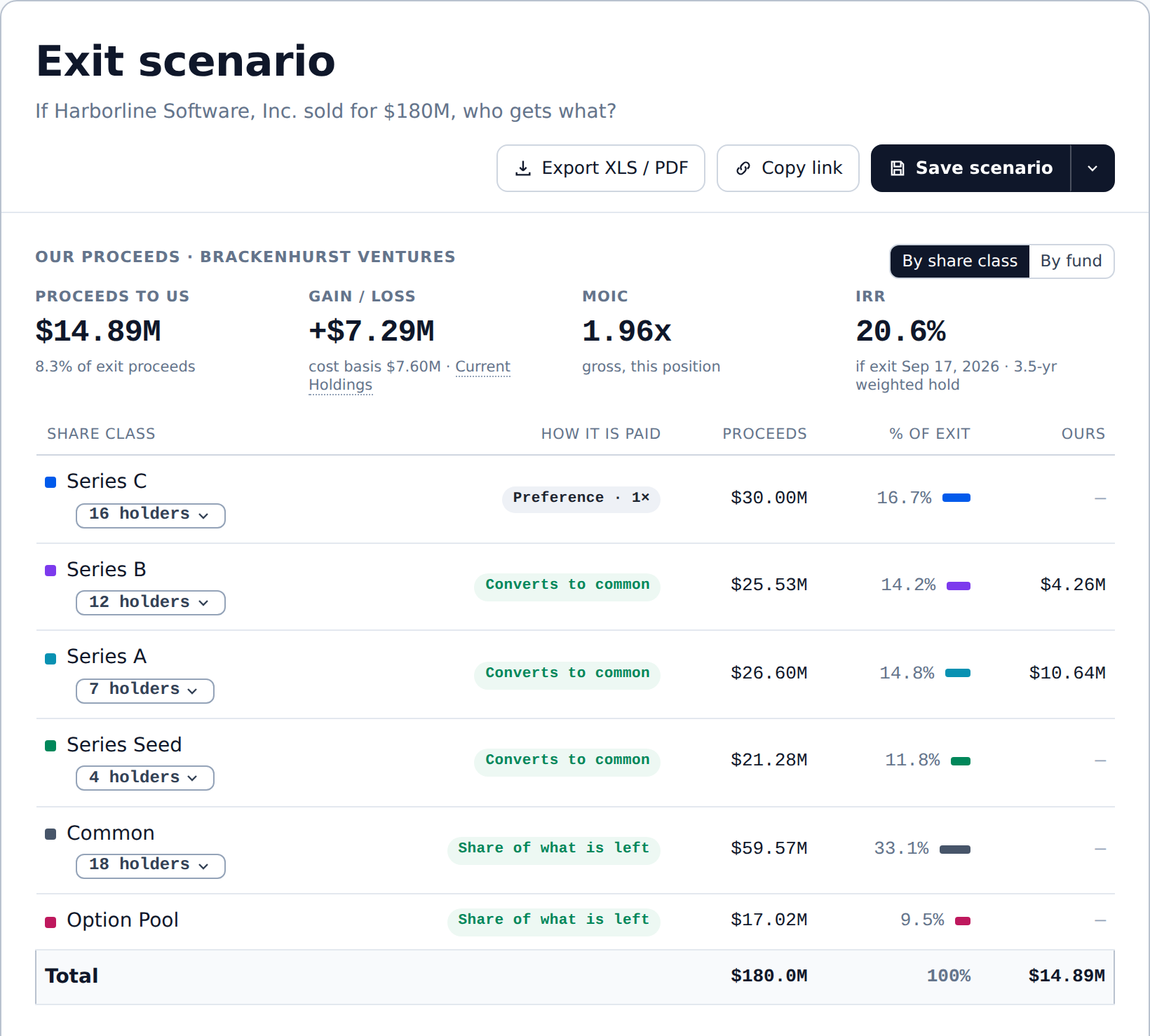
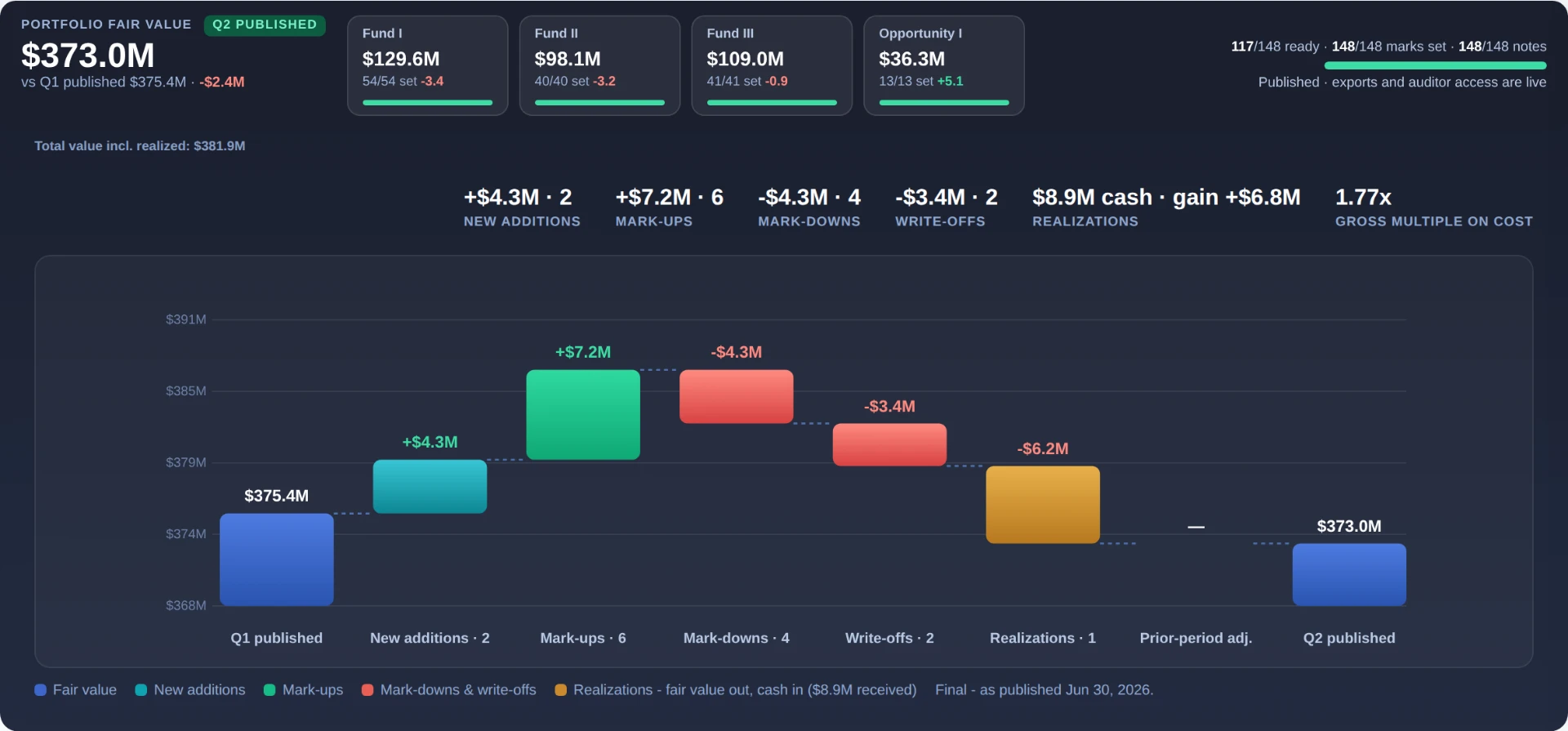
The valuation done, not just the inputs: the mark on every position, the memo behind it, the bridge from last quarter's published value to this one, and the audit file underneath. You stay the preparer and the approver. And the exit waterfall you used to rebuild for every partner question is already built for every company, so partners self-serve it. Sick and tired of running these models for your partners? Let them. Nothing they type changes a document, a mark or anyone else's screen, nothing they run ever becomes a mark, and the number they quote is the one you would have given them.
For GPs and managing partners
What the fund gets, by vehicle, before the call.
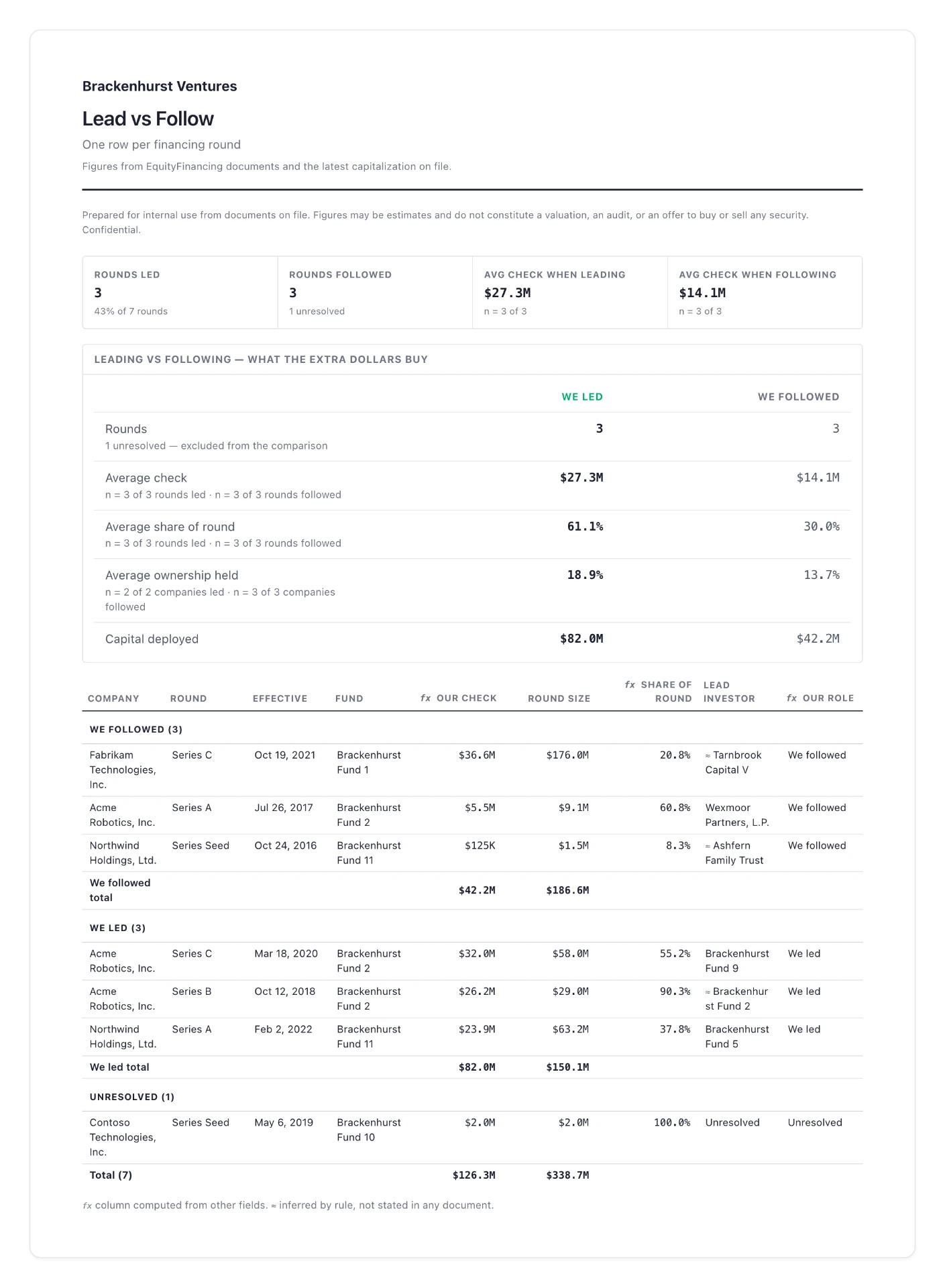
Type the price the banker floated and read what comes back to Fund II and to Fund III, MOIC and IRR on the position, and every shareholder's share of it. When a co-investor or an LP asks what $200 million does for the fund, this is the screen you send back that afternoon. For the partnership meeting, the reports: lead versus follow, deployment by vintage, exposure by stage, from the same record as the marks.
For the investment team
Sick and tired of asking your CFO to run these numbers? Now you run them.
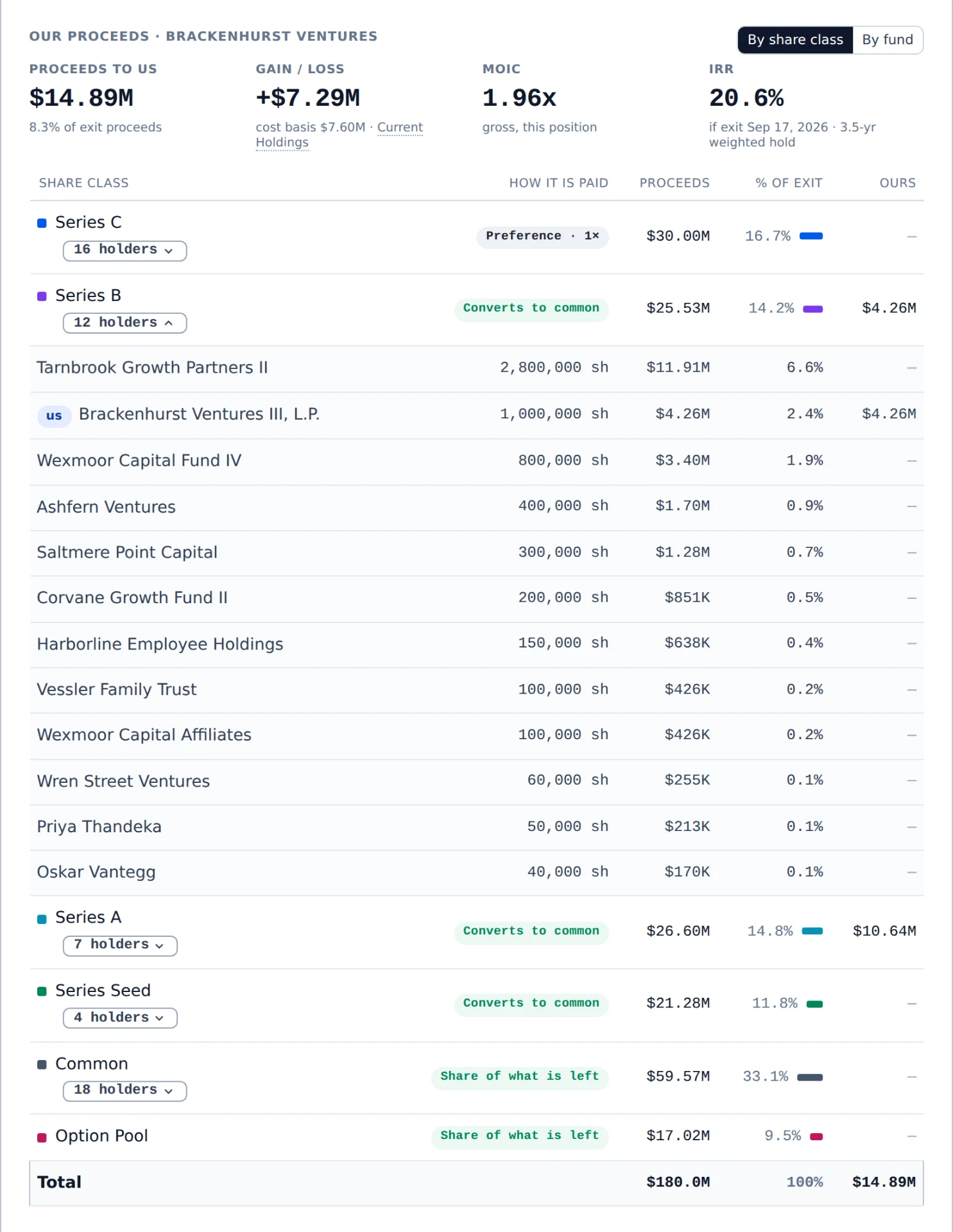
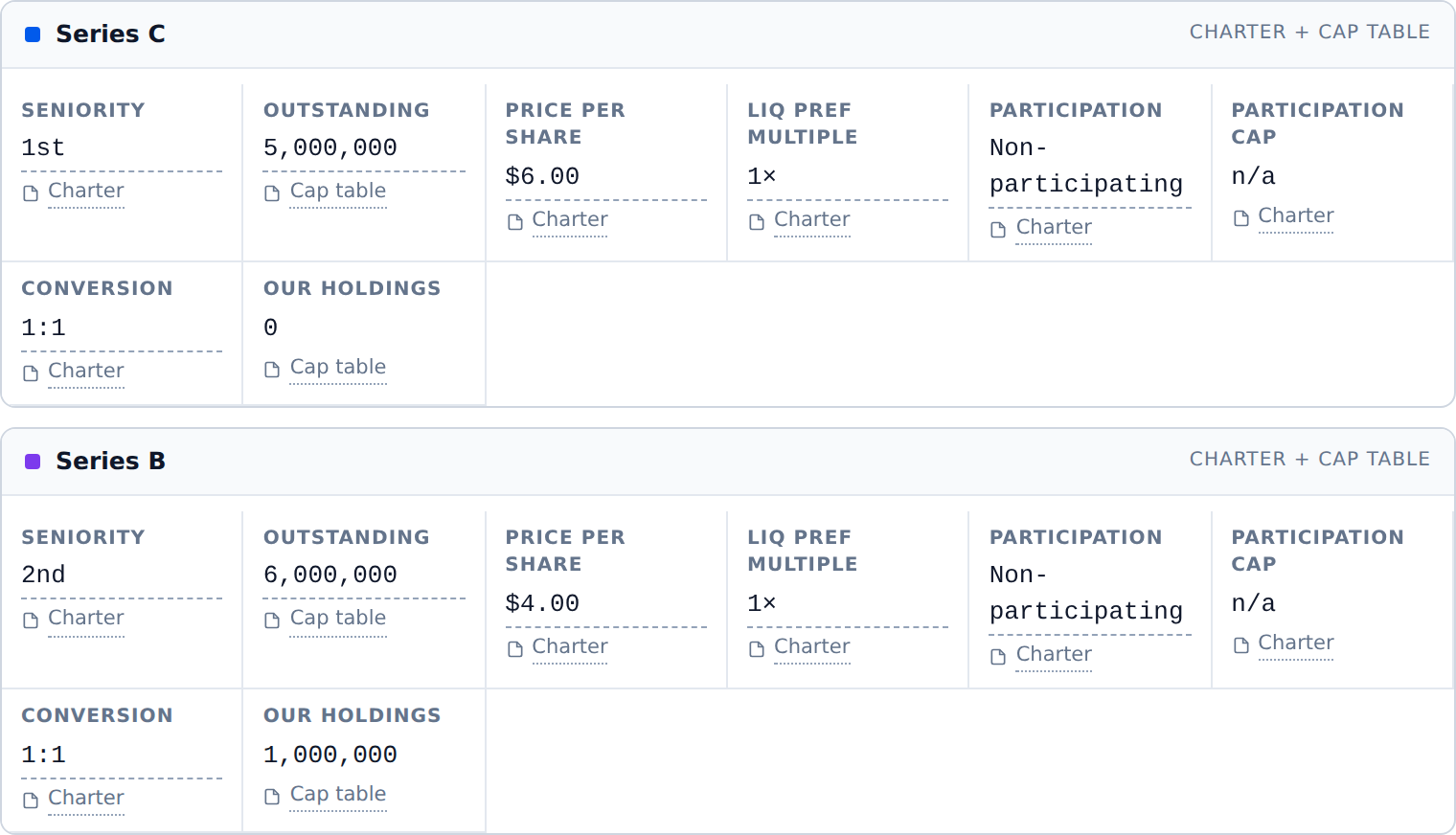
If we sold this company at X, what does every shareholder get? Type X. Any price, or a multiple of ARR, EBITDA or the last round, for any company you hold, and the exit waterfall flows to each fund and holder, by share class, straight from the financing documents, the charter's preference stack and the cap table. See where each class converts, what the founders clear, and what the next round does to your ownership. Any number opens into the arithmetic behind it and the clause it came from.
For the front office
A track record proven from the documents, and the investors who sit beside you.
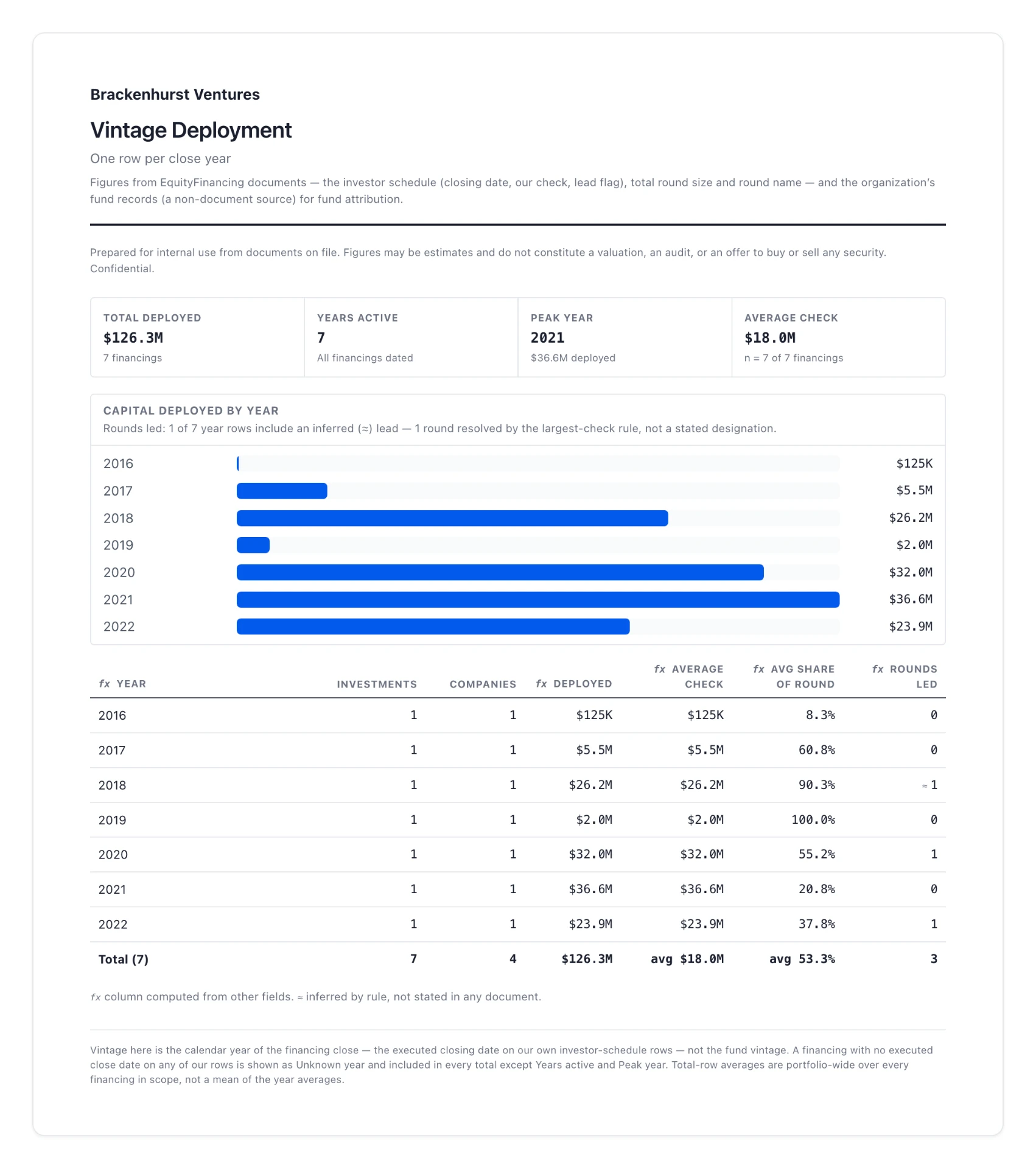
Allocators re-derive every number a manager shows them. A record assembled from executed documents does not need re-deriving: every deal, every round, every check traced to the page that proves it, with deployment by vintage and average check by year ready to export. The same documents name the co-investors beside you, so the graph of who invested with you, in which rounds, assembles itself. For the raise, for the deal forming now, for the reference call.
For the back office
Nobody re-keys another PDF.
Email, drives and data rooms flow in once. Each financing agreement, charter, cap table, note, SAFE and board deck is read, extracted and validated by more than one model, and our review team checks every value the models were not certain of before it enters the record. Every term shows the document it came from. What is missing is listed with who has it, so the chase is one email instead of a hunt. Exports, journal entries and the audit pack come out of the same record.
See it on your own book.
Bring a quarter's worth of documents to the demo. We'll show you what's already in there, for every role at the table.