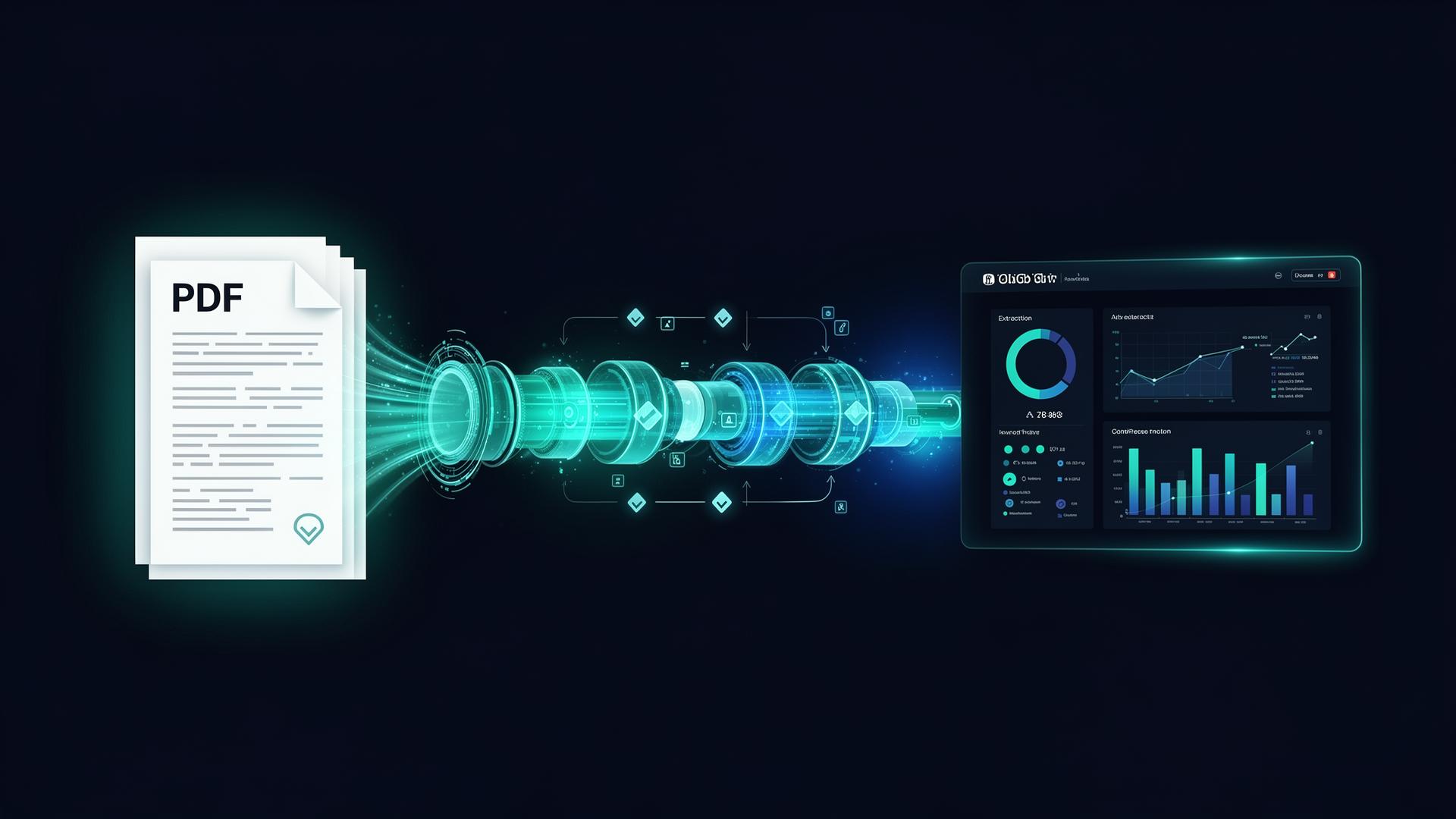
Every quarter, VC operations teams pay a tax.
It's not a fee they write a check for. It's not a software subscription. But it costs them just as much - in hours, in accuracy, in lost intelligence, and in the capacity of their best people.
We call it the PDF tax.
It's the cost of extracting portfolio data from documents that weren't designed to be data sources. PDFs with scanned images instead of text. Spreadsheets with inconsistent formatting. Email threads buried three levels deep. Side letters that only exist in physical form. Board decks with embedded financial tables that contradict your official records.
Every quarter, someone has to hunt all of that down, clean it, normalize it, cross-reference it, and feed it into your systems. And every quarter, the process repeats.
It's not just the time, though the time is real. A VC associate told me bluntly last month: "The single most painful part of our jobs is the quarterly process where we have to collect all this data manually and prepare it for valuations. It takes weeks. It's boring. Everyone hates it. And it's a waste of talent."
This firm had hired sharp people. Talented analysts who could be sourcing deals or diving deep on underwriting. Instead, they're spending two weeks every quarter on data entry.
But the PDF tax has a second cost - and it's bigger.
When portfolio data flows by uncaptured, it can't be structured, queried, reused, or trusted. So you don't just waste hours - you miss signals. You lose visibility into what's actually changing in your portfolio because the changes didn't make it into any system anyone's monitoring. A portfolio company has a quiet layoff. A key hire leaves. A customer churns. Six weeks later you find out because someone finally updated the spreadsheet.
An investor updates a cap table after a secondary transaction. Three months later you're still assuming the old structure in your valuation models. You run the waterfall wrong because the input data was stale.
A side letter gets signed that changes an investor's economics. Nobody updates the system. You're allocating proceeds to the wrong person.
This is what happens when data extraction is manual and asynchronous.
The PDF tax isn't just "we spent forty hours on data entry this quarter." It's "we're flying blind on the data that matters most and we're basing decisions on stale information."
Automating Portfolio Monitoring
Automating portfolio monitoring - actually automating it, not just creating better spreadsheet templates - does two things:
First:
It turns document chaos into structured portfolio intelligence you can actually use. A founder sends a quarterly email with embedded cap table changes - we extract those changes in minutes and surface them immediately. A board deck lands with new financial projections - we pull the numbers, validate them against your existing records, and flag inconsistencies before they cascade into your portfolio view. You're working with current data instead of a quarterly digest.
Second:
It creates task loss, not job loss. The low-value busywork disappears. Your best people get reallocated to higher-leverage work: better decisions, better support for your portfolio companies, better narrative construction for LP reporting, actually catching risk early instead of discovering it in hindsight.
The point isn't just doing quarter-end faster.
It's stopping the PDF tax and getting your team's capacity back.
For most VC firms running portfolio ops with two to four people instead of ten, automating this is the difference between operating at scale and constantly being behind. Every quarter you're paying the tax in hours. Every quarter you're missing signals because the data didn't flow fast enough. Every quarter your best people are frustrated because they're doing work that a machine could do better.
It's time to stop.