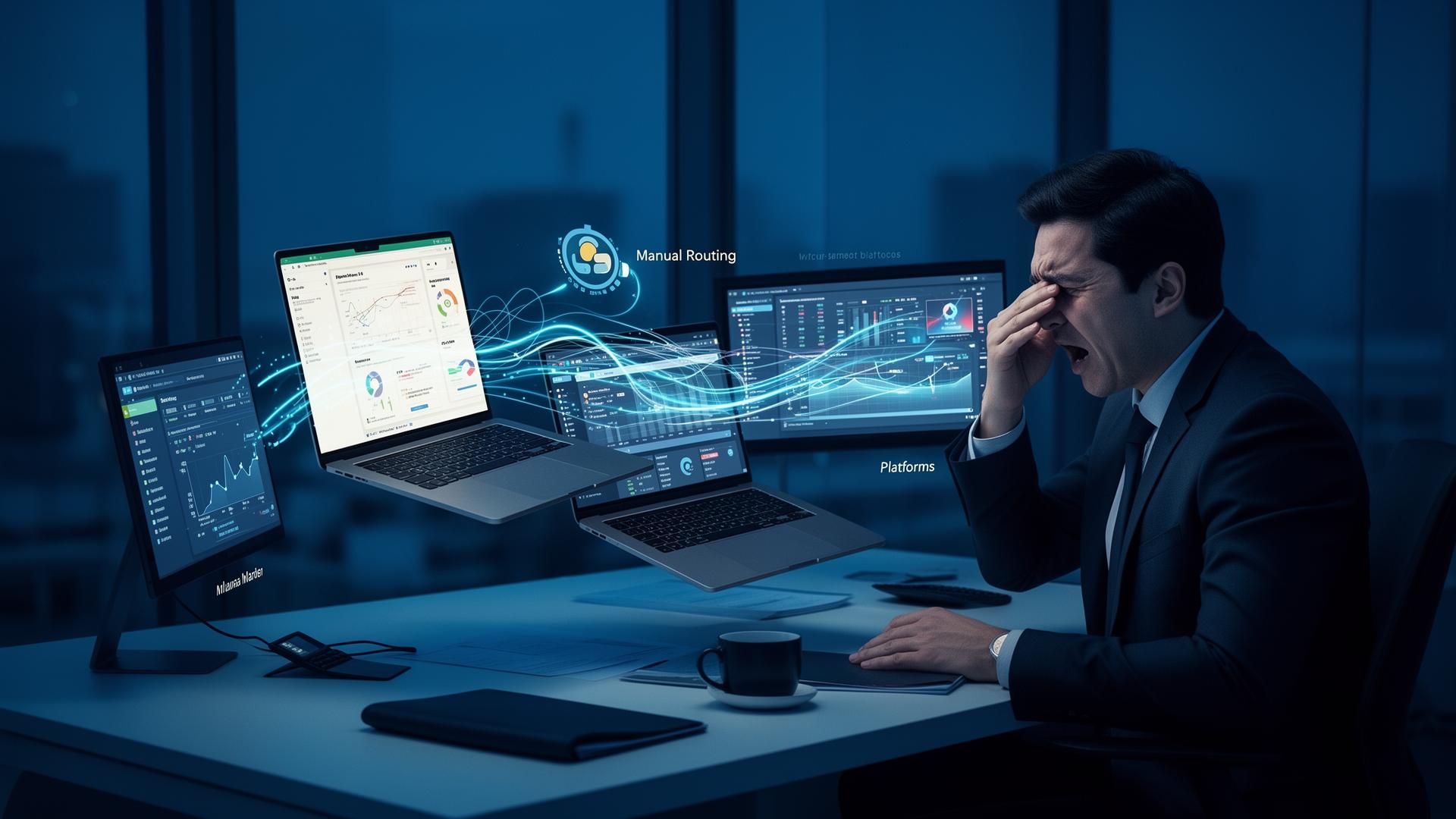
Last week I met an analyst at a VC firm who quietly keeps the whole portfolio glued together.
On paper, her job is deals. That's her title. That's what the org chart says. Sourcing, underwriting, follow-ons, board support.
In reality, her quarter looks different.
She spends forty to fifty hours just chasing seventy-five founders across her fund's portfolio for quarterly updates. Not sophisticated investor relations - just basic "hey, can you send us your numbers?" emails that she has to follow up on three times because not everyone responds on the first ask.
When those updates actually arrive, they're in five different formats. Some are spreadsheets. Some are Google Sheets. Some are PDFs. Some are embedded in longer emails with commentary mixed in with data. She spends another twenty hours just normalizing that data into a consistent format.
Then she rebuilds the fund's portfolio spreadsheet - the master model that holds cap tables, ownership percentages, valuation assumptions, and the waterfall calculations that matter for fund economics. That's another fifteen hours of work because the spreadsheet's structure doesn't match the way the data arrives, so she's manually reconciling and translating.
And then the partners start asking questions. "What's our current ownership in Company X after the last round?" "Can we afford to participate in this Series C?" "What would a down round do to our economics?" Each of those questions requires another hour or two of spreadsheet gymnastics - building scenarios, checking assumptions, validating calculations.
She's smart. Ambitious. Exactly the kind of talent a VC firm wants to keep.
And roughly eighty hours every quarter - two full weeks of work - is spent on data wrangling instead of actual deal work.
That's the problem.
This isn't a problem specific to this one firm. Every VC firm has a version of this analyst. The person who's become the glue layer between the messy reality of what's happening with portfolio companies and the clean systems the firm uses to make decisions.
Some firms have bigger teams that distribute this work - an ops person, maybe an analyst dedicated to reporting. But they're all paying the same tax: talented people spending significant time on work that doesn't require talent to do.
GoodStream is built to eliminate this specific layer.
We automatically extract key data from the emails, PDFs, and spreadsheets your firm already receives. The board deck with embedded financials - we pull the numbers. The cap table PDF that just arrived - we extract the structure, the ownership changes, the investor details. The founder email with inline commentary about cash burn - we pull the metrics.
We standardize all of that. We validate it. We track provenance so you know exactly where every number came from and when it changed. And we feed it directly into a live Portfolio Knowledge Graph that your team can actually query and use.
For this analyst, that means:
- Eighty hours per quarter back - two full weeks - to focus on sourcing, underwriting, and actually working on deals
- Portfolio views that update automatically as documents land instead of waiting for manual integration
- Partners asking better questions because the answers are already visible - they can query the Portfolio Brain themselves instead of having to interrupt the analyst every time they want to know something
- Actual capacity to support portfolio companies, not just shuffle data around
For the partners, that means:
- Real-time portfolio insights without hiring more analysts or contractors
- Their best talent stays focused on what's important - the investing, the decision-making, the company support
- The fund gets more value from the same team because that team isn't drowning in data wrangling
Here's what really stuck with me from that conversation:
This analyst is sharp. The firm knows it. They're paying market rates to keep her. They're competing against other opportunities for her attention. And they're spending nearly a quarter of her time on a task that doesn't require her sharpness at all.
The real question for VCs today is straightforward:
Are you going to keep using your best talent as human middleware - the glue layer between document chaos and decision-making - or are you going to free them up to actually invest?
Because every quarter you don't answer that question, you're paying an invisible tax in lost capacity and frustrated talent.